
How Adnomics & The Fold reduced CPA by 40% with Confect
November 6, 2025
.png)
Adnomics is a digital marketing agency that specializes in delivering results, FAST! They use tools like Confect to help new and established brands make more sales, while reducing costs and improving ROAS, within a matter of weeks.
The Fold is a London-based eCommerce retailer, launched in 2012, that sells “modern, luxury womenswear from ambitious women.” They have an extensive product lineup, which includes everything from tops and blouses to trousers, dresses, jackets, knitwear, shoes and accessories.
The Fold’s products reflect the world of high-end luxury fashions. But they had one big problem: their catalog ads looked like every other brand’s catalog ads, not reflecting the same level of luxury or refined sophistication as their clothing.
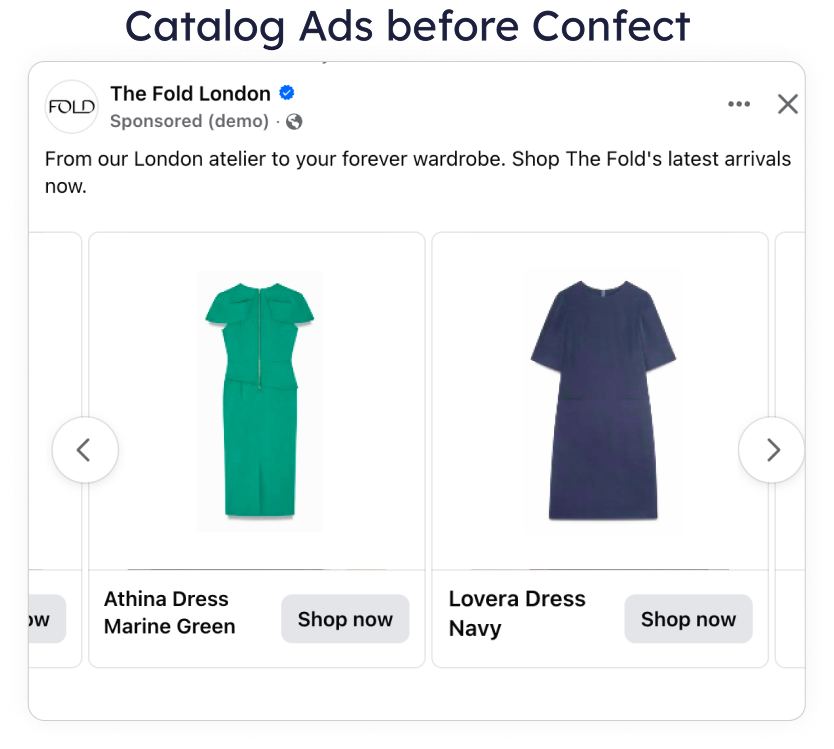
And that’s why The Fold partnered up with Adnomics. They wanted visually-appealing branded ads, better scalability, and optimized catalog ads that would ensure only the best qualified shoppers made their way onto the website.
This was paired with a +27% higher conversion rate in the UK and a +24% conversion rate in the US thanks to smarter product targeting for higher intent audiences and structured DPA segmentation.
We recently caught up with Louis Ayre, Managing Director at Adnomics, who walked us through how the team achieved these results by using Confect to completely revamp The Fold’s dynamic product ads.
Their results using Confect for their Catalog Ads
Here are the 4 important tactics they implemented via Confect that helped them achieve these results.
Improving perception with branded visuals
High-end luxury brands generally target more affluent audiences, which is why their ads aren’t usually focused on products or price. They’re about a feeling or lifestyle rather than anything else.
That’s why The Fold’s standard catalog ads just didn’t cut it. They lacked the premium feel and high-end visual aesthetic that all luxury brands want to convey to their audience. And that’s something you can do only when you take control over your catalog ads designs.
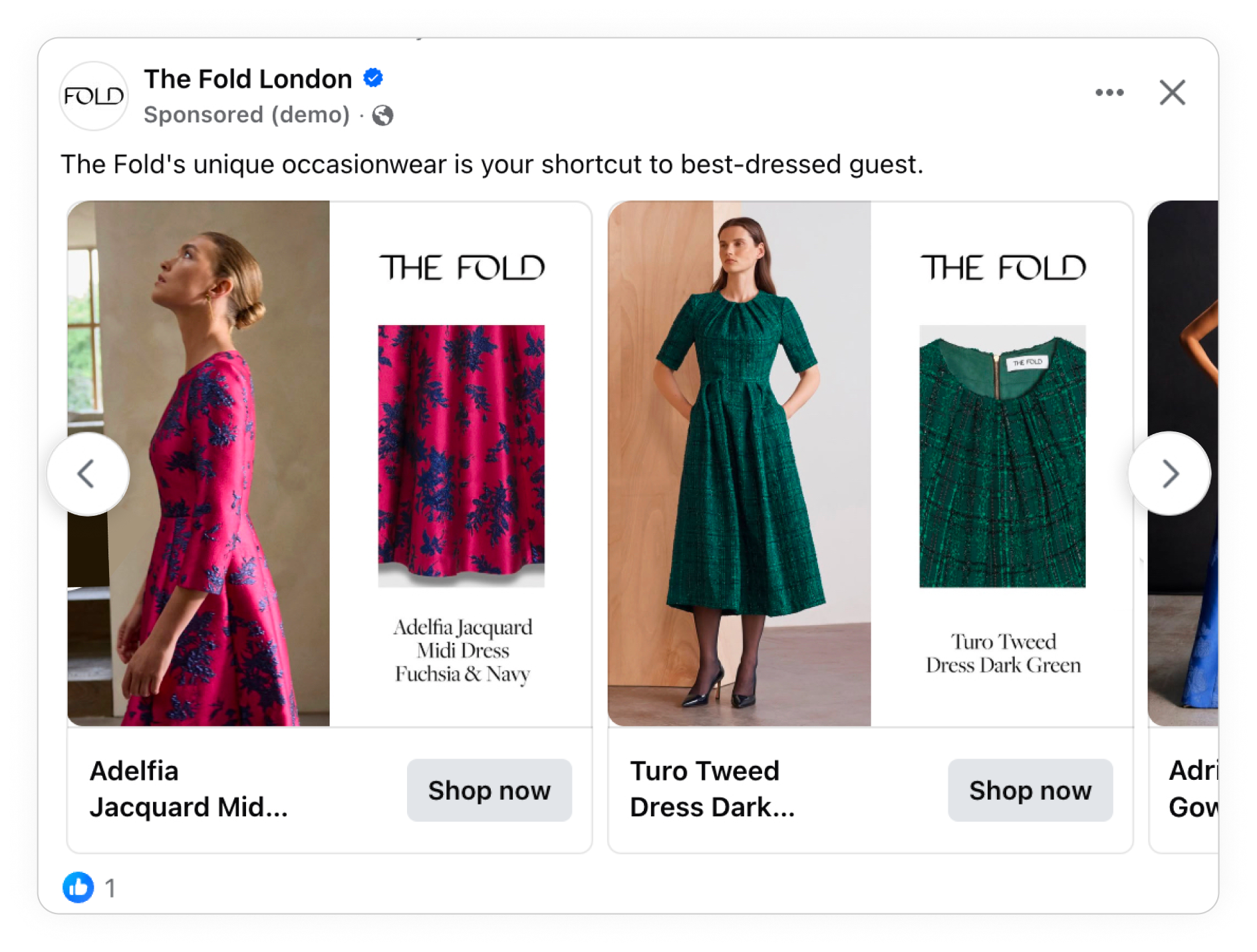
It’s also why Adnomics’ first move was to create custom brand templates for The Fold’s catalog ads that incorporated:
- Full-height lifestyle imagery
- Close-up shots of fabrics to show detail and textures
- The Fold’s logo and product name
By using close-up product shots, the new DPAs conveyed more details. They also help showcase The Fold’s products in a better light, making them look more refined and sophisticated than what the standard catalog ads were capable of doing.
And that’s truly important when you’re selling high-priced fashions.
 Louis Ayre
Managing Director @ Adnomics
Louis Ayre
Managing Director @ Adnomics
Now, we know that Adnomics didn’t reinvent the wheel by using close-up product shots.
But the results, a -40% reduction in CPA (UK) and +27% conversion rates, prove that elegant, brand-consistent designs are better at converting traffic than when you’re using generic DPA templates.
Optimizing ad spend with smart product set segmentation
Once the team landed on a winning ad design, the next step was to optimize their catalog by creating custom product categories.
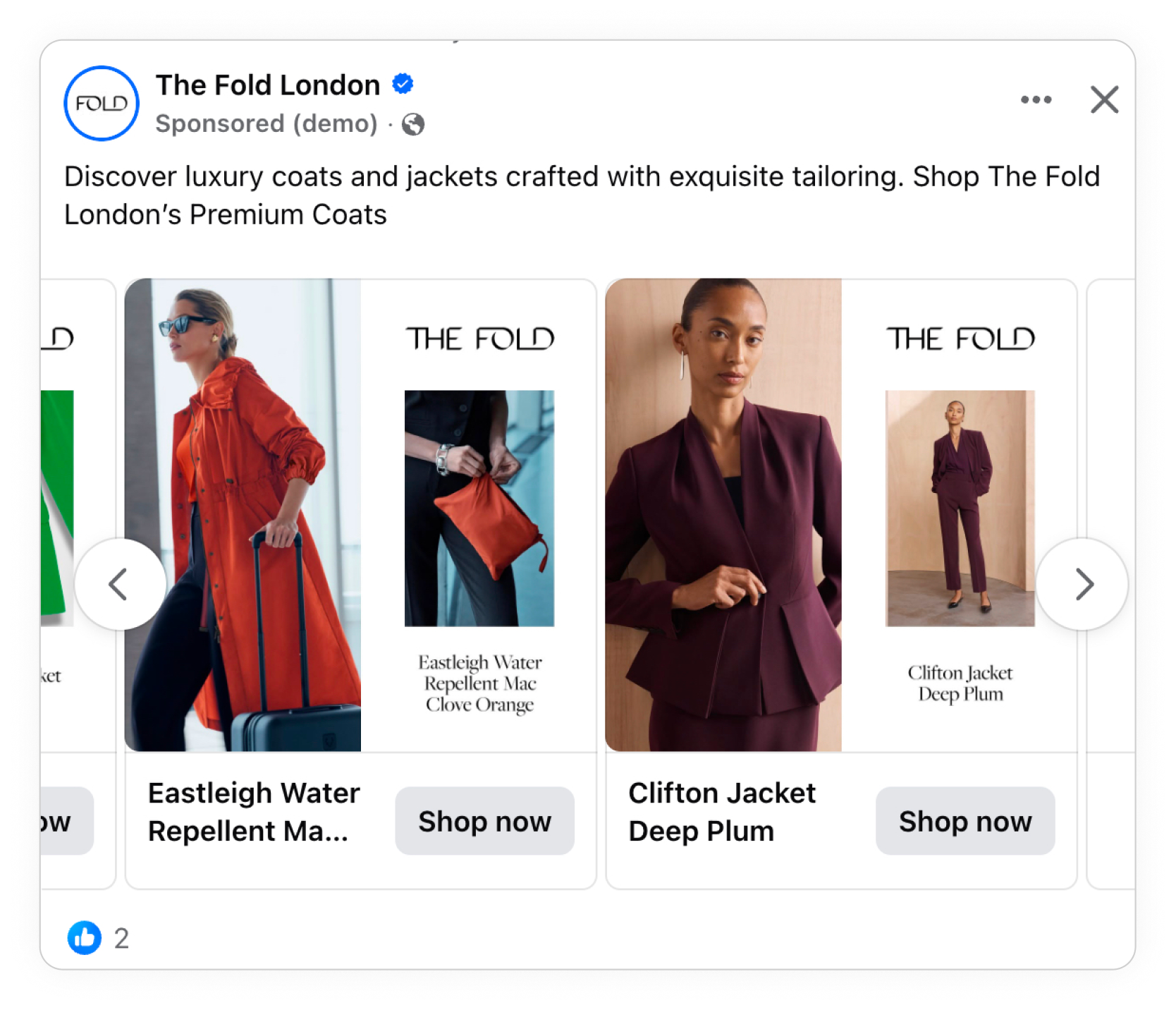
Rather than relying on catch-all ads, Adnomics built tactical product sets, including categories like “New In,” “Bestsellers, “Occasionwear,” etc. Creating product sets like this might take a bit of time to set up, but it allows for:
- More precise audience targeting
- Visual tailoring based on product categories
- Prioritizing high-converting items
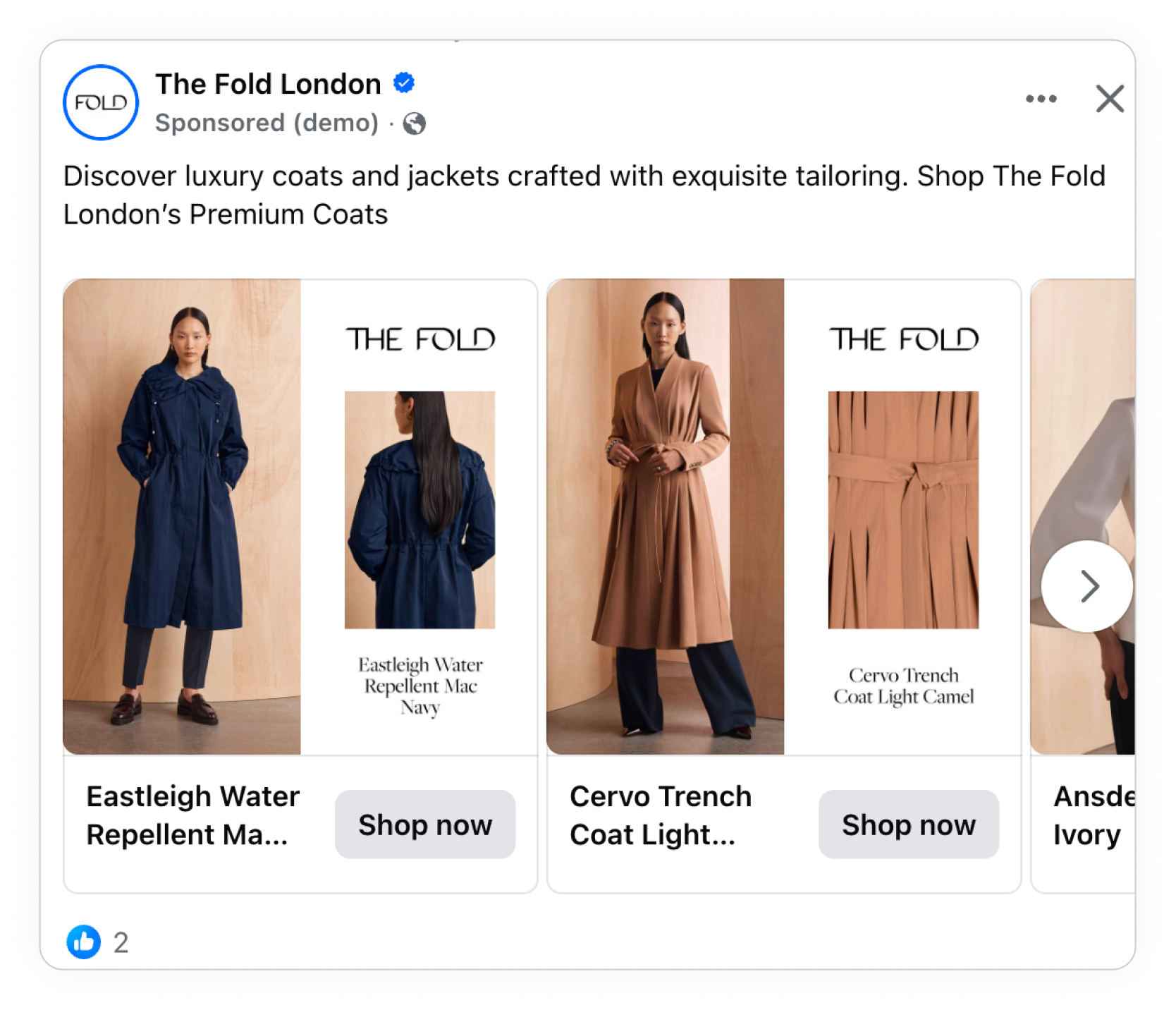
That’s the true beauty of product segmentation! It allows you to take control of your budget, focusing your spend on products you know are great at selling themselves.
Louis Ayre
Managing Director @ Adnomics
Plus, product set segmentation also allows you to update ads dynamically whenever conditions change.
So if a product drops from your bestseller list, it’s no longer shown to your audience. Instead, the category is automatically updated and attention is directed to whichever product replaces it.
Using price to qualify and convert the right viewers into customers
Louis also explained to us why his team added price overlays, despite it being something that a lot of high-end brands are hesitant to do.
However, he goes on to explain that the people seeing these ads had already been through to the website. They’d seen the ads or products before. So instead of beating around the bush, this is actually a great time to give people information like pricing, which helps scare away clicks that are likely to bounce anyway.
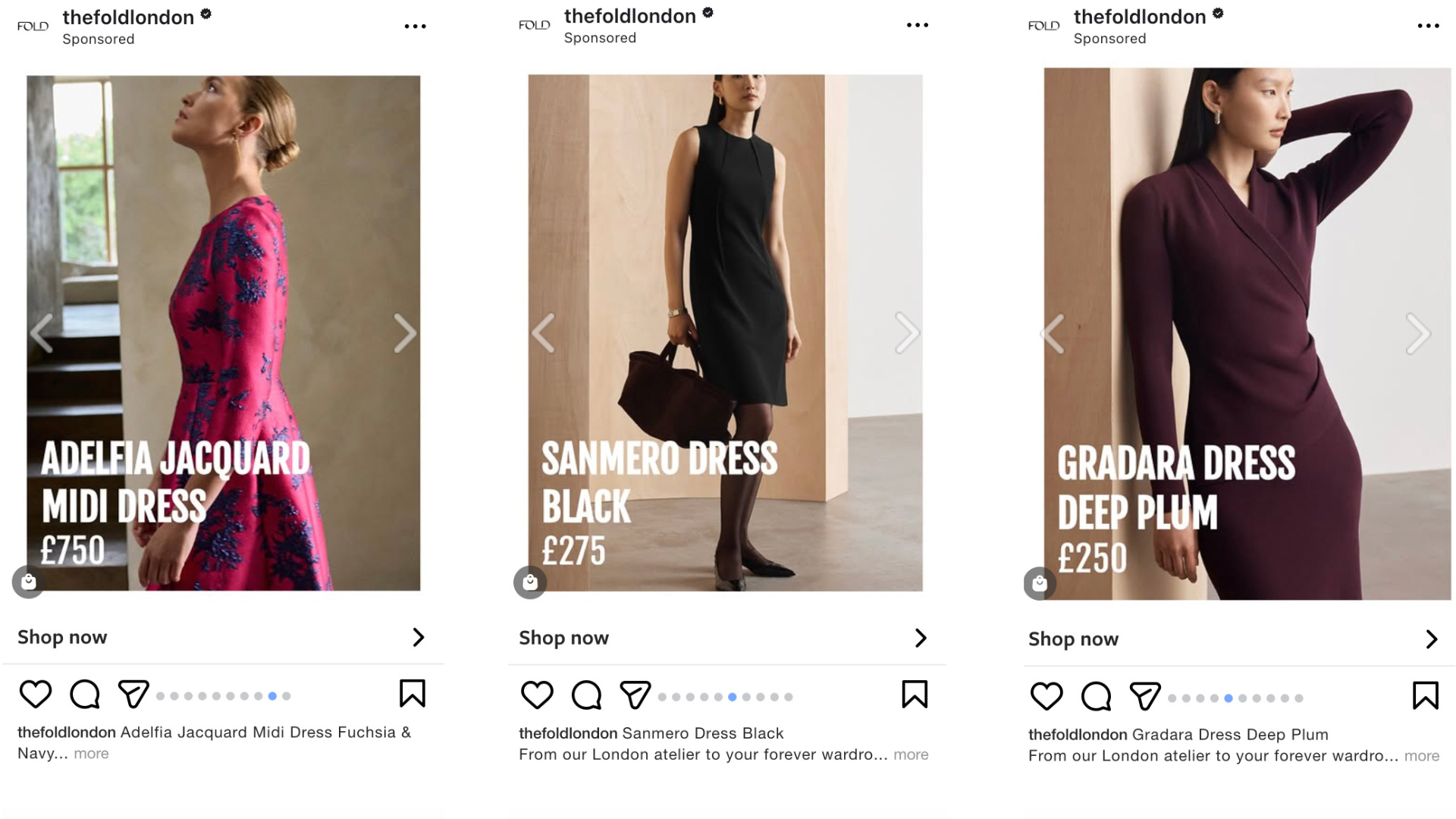
Essentially, all of those reluctant brands are right. Prices can scare people away from clicking on an ad. But that’s not a bad thing! It filters in the right shoppers, those who are more likely to convert, and filters out the window shoppers.
After adding price overlays, The Fold saw lower click-through rates, which was offset by significantly higher conversions.
This happened because it provides Meta with stronger signals about who is and who isn’t interested.
Louis Ayre
Managing Director @ Adnomics
Ultimately, showing prices ensured The Fold’s catalog ads would be shown to people with higher levels of buying intent, rather than a broad audience where a lot of ad spend gets wasted on window shoppers.
Showing localized USPs by funnel stage and market
Branded templates? CHECK! Product sets created? CHECK! Next, it was time to optimize The Fold’s retargeting catalog ads to nudge viewers into making a purchase.
They knew that if somebody was seeing this ad, they were already familiar with the brand and its product. So instead of creating more product-focused ads, it was time to get salesy.
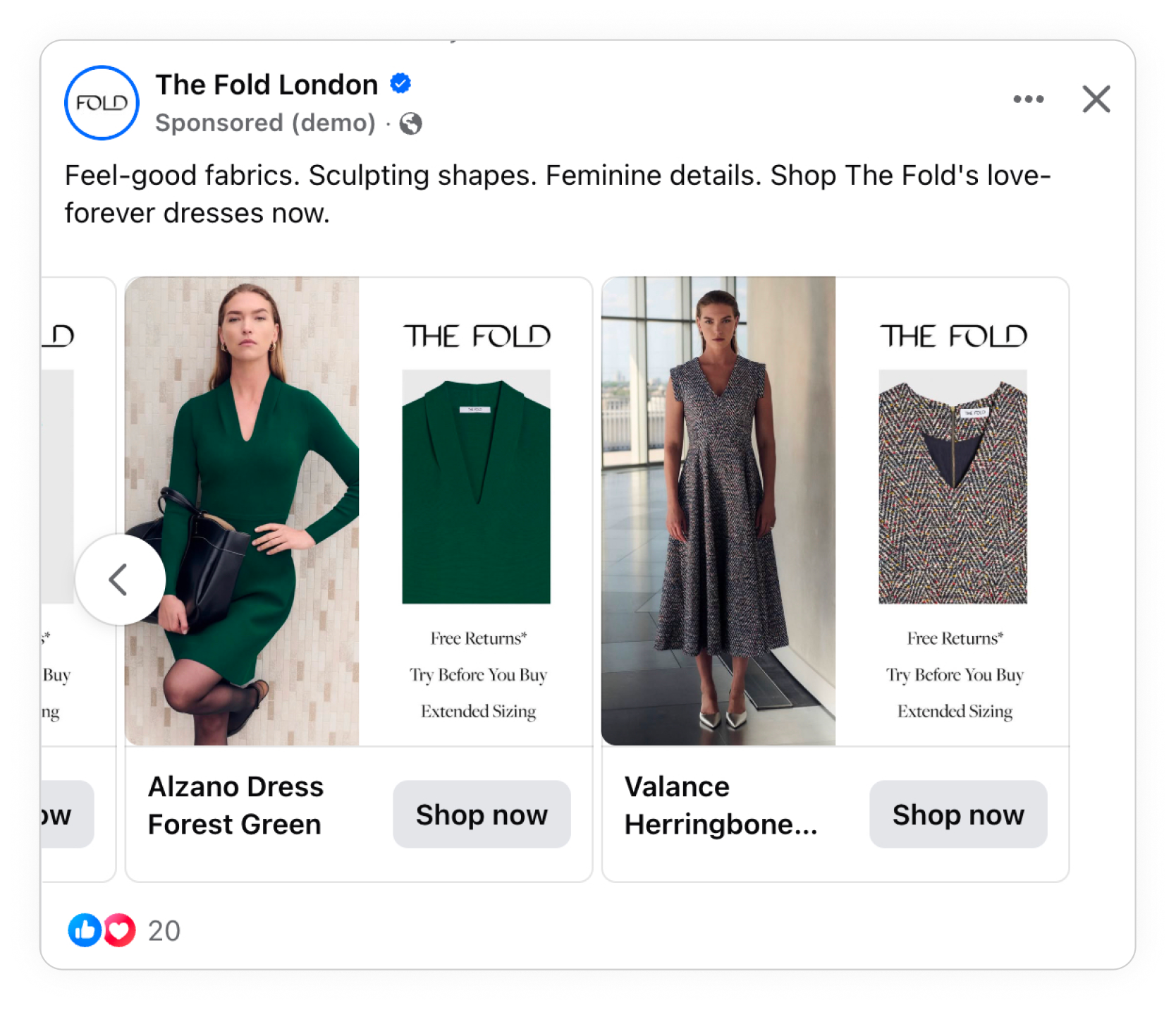
For this, Adnomics swapped out product names for transactional value propositions in lower-funnel retargeting ads.
Now, instead of showing product names or branding, bottom-funnel DPAs showed things like “Try Before You Buy” or “Extended Sizing” for UK-based audiences, and “Free International Returns” or types of shipping information for US-based audiences.
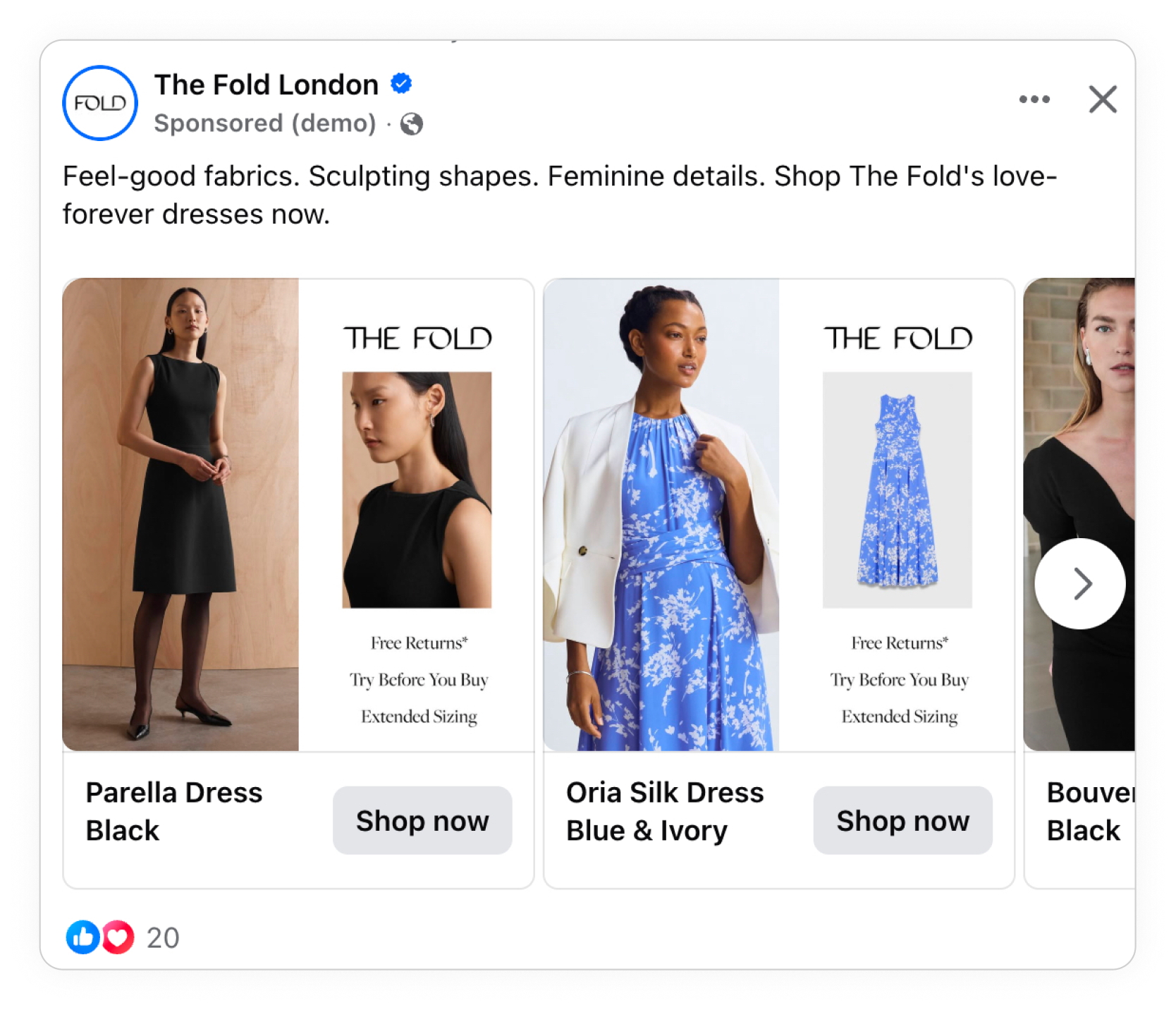
This ensured the new ads catered to the audience’s needs based on where they’re located physically (market-wise) and emotionally (funnel stage). After all, bottom-funnel ad viewers don’t need product names or brand info. They need reassurance!
Louis Ayre
Managing Director @ Adnomics
Ultimately, showing localized USPs resulted in higher purchase readiness and catalog ads that spoke directly to the needs of the audience based on whether they were located in the UK or the US.
Conclusion
Through a combination of creative strategy and data-first execution, Adnomics helped The Fold unlock Meta’s performance potential without compromising brand integrity.
Together, and with the help of Confect, the duo created brand-forward designs and optimized product sets. They also leveraged localized USPs, and worked to qualify traffic so that only those most likely to convert now made their way onto The Fold’s website.
And that resulted in ad performance that you can’t fake!
With -40% CPA, +27% conversion, and localization across every touchpoint, this is a blueprint for any premium brand looking to scale through smarter, more elegant catalog advertising.