
How BeSocial increased ROAS by 36% for Baum und Pferdgarten with Confect
October 23, 2025

BeSocial is a performance marketing agency that works with fashion, lifestyle, and home brands. They use Catalog Ads to help the companies they work with build brand recognition and improve scalability.
Baum und Pferdgarten, one of their clients, is a fashion brand focused on bold, recognizable designs, and stylish clothing that’s hard to ignore.
They sell all sorts of trendy clothing. But their Catalog Ads were missing a strong brand identity that could help them stand apart from their competitors.
Their ads used to look like this:
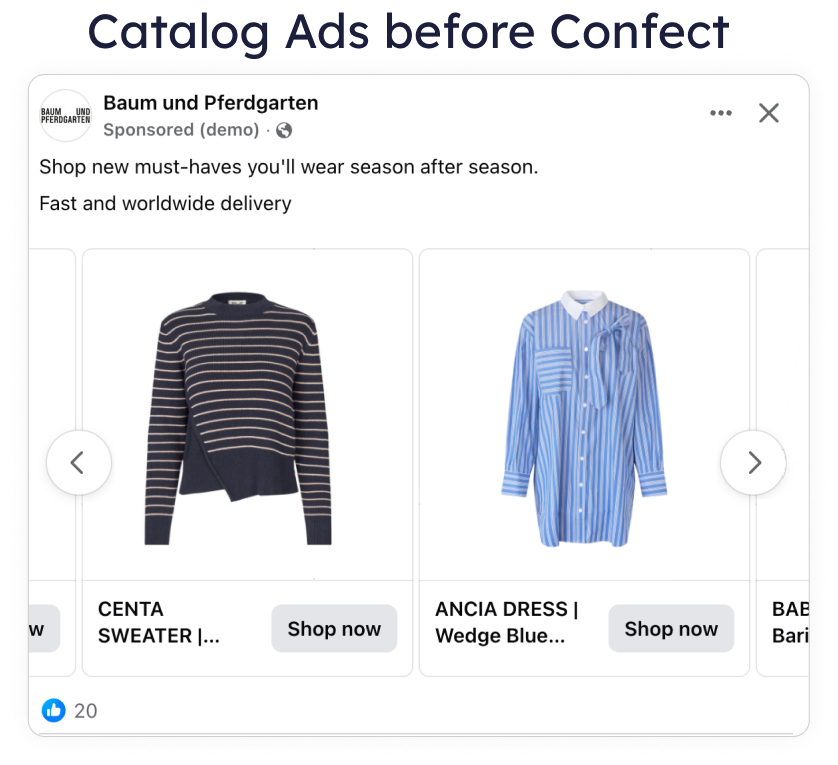
BeSocial team created an entirely new campaign focused on branded designs, improved funnel segmentation, and adapted to 9:16 placements for full-funnel coverage. By implementing those strategies Baum und Pferdgarten achieved a +36% ROAS on their Catalog Ads campaign.
We recently spoke with Mathias Jørgensen, Head of Clients & Partner at BeSocial, who walked us through why they chose the following strategies for Baum und Pferdgarten, and how they used Confect to implement them and achieve such great results.
Their results using Confect for their Catalog Ads
Mathias shared 3 important tactics they implemented via Confect that helped them achieve these impressive results.
Let's dive into some of the tactics Baum und Pferdgarten and BeSocial used in their Catalog Ads.
Injecting Brand DNA into Catalog Ads
Generic ads are unappealing to most people. So when brands fail to reflect their brand identity in Catalog Ads, they also fail to capture audience attention.
However, using brand assets ensures your brand stands out.
And as Mathias explained to us, Baum und Pferdgarten has bold clothing designs and bold visuals on their webshop.
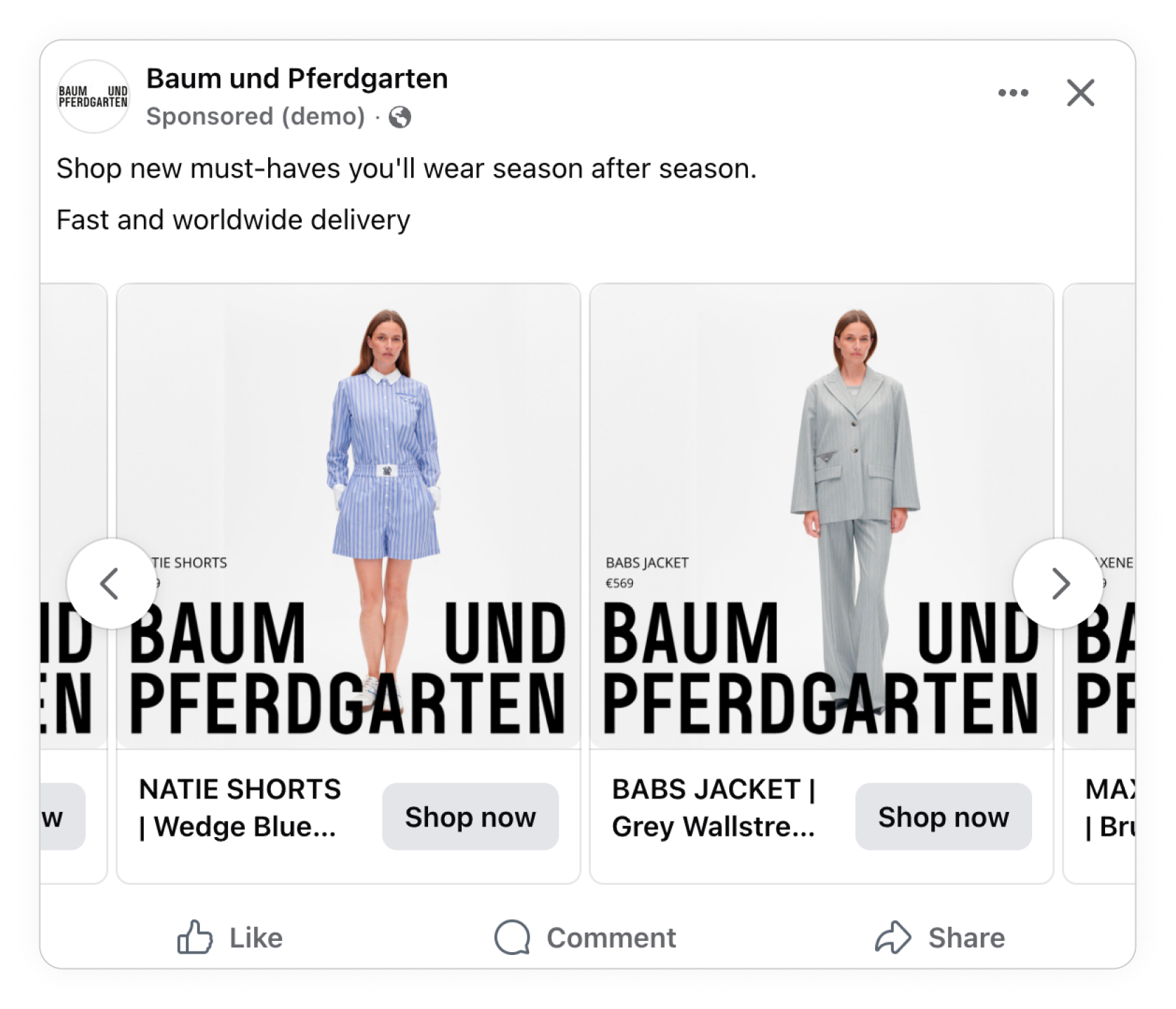
So an important strategy was to take Baum und Pferdgarten’s brand assets (fonts, logos, formats, etc) and apply them consistently to the creative layer of their Catalog Ads.
This is actually something that every brand should take as a first step when looking to improve their Catalog Ads.
And it was a genius move on BeSocial’s part because it had a huge impact on how the ads looked and appealed to viewers.
Mathias and his team started by using large, bold logos and branded fonts that made every ad look similar to the brand’s website. This ensured the brand’s visual identity was dominant in each and every frame.
But then they also implemented an interesting visual strategy, where they placed product images inside the brand logos, directly between “Baum” and “und.”
This was another genius move that helped them create scroll-stopping ads just by showing viewers something different and unexpected.
By injecting a bit of branding into their designs, Baum und Pferdgarten’s Catalog Ads now delivered stronger brand recognition and a way to make people stop scrolling and take notice of the products they have for sale.
 Mathias Jørgensen
Head of Clients & Partner @ BeSocial
Mathias Jørgensen
Head of Clients & Partner @ BeSocial
Optimizing creatives to match shopper intent
Once they included the brand identity in their catalog ad layouts, the next move was to optimize designs based on user intent and the three stages of the brand’s sales funnel.
Meta’s algorithm is great at delivering relevant ads to people who are most likely interested.
But when brands use one-size-fits-all ads, they don’t cater to the varying levels of intent found throughout a customer’s shopping journey.
That’s why BeSocial designed three different Catalog Ad layouts that matched specifically to different levels of the buyer’s journey. They wanted to create ads that matched top, middle and bottom funnel shopping intent.
The goal of top-funnel ads is to get people familiar with the brand, without pushing sales or promoting your products.
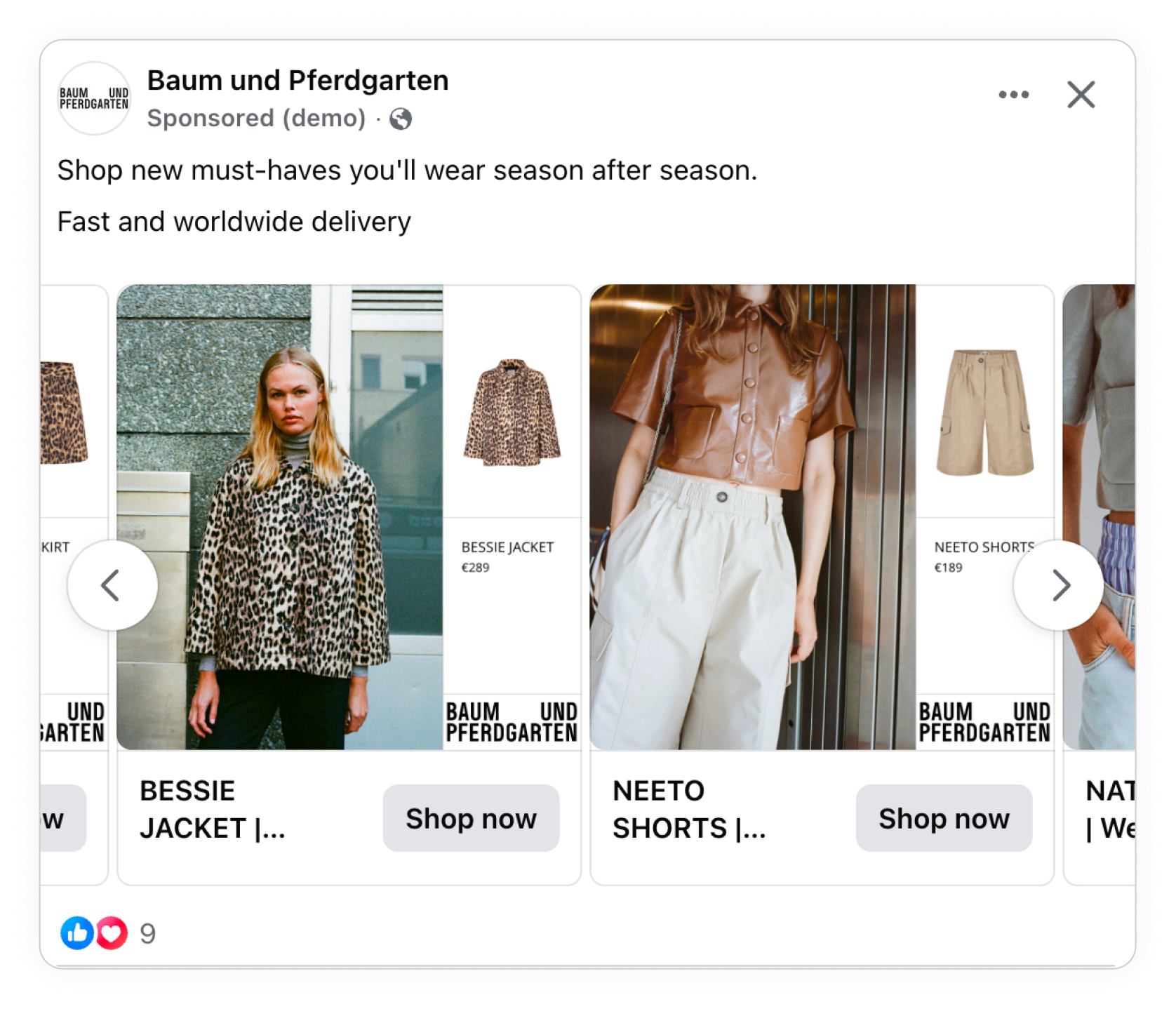
So, with the aim of improving brand recognition, BeSocial created a top-funnel ad format featuring big logos and lifestyle pictures that help shoppers visualize themselves wearing the clothing.
For middle-funnel ads, the goal is to forge stronger connections with the people who are now familiar with your brand. You can be a bit more forward with showing products, but you don’t want to be salesy just yet.
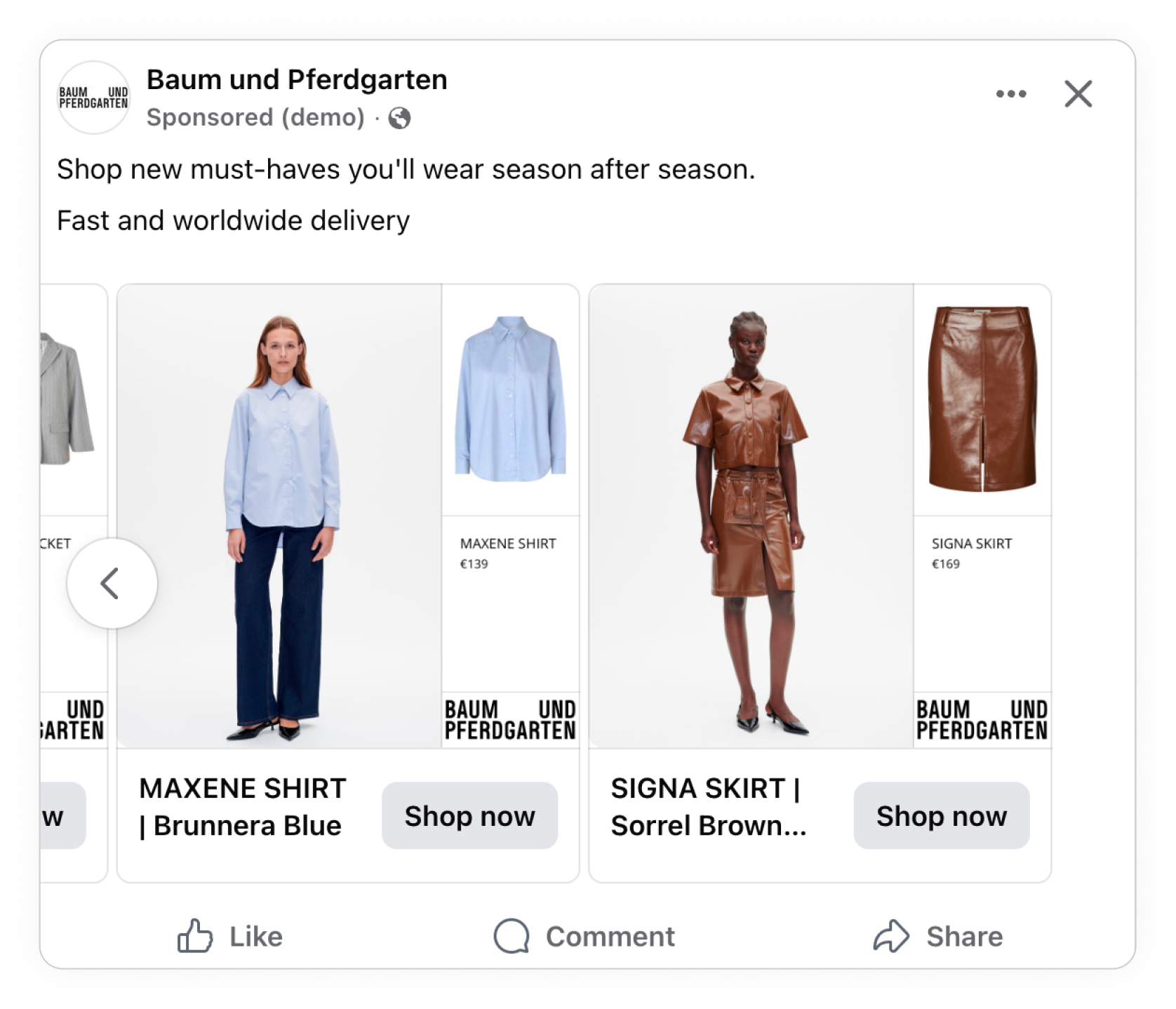
With that in mind, BeSocial created a mid-funnel ad format that mostly used model images. These designs showed the products in full-body view, combining an image of a model and the packshot of the product.
And lastly, at the bottom of your sales funnel, you’ve got people who know your brand, who know your products, and who just need a good reason to buy something.
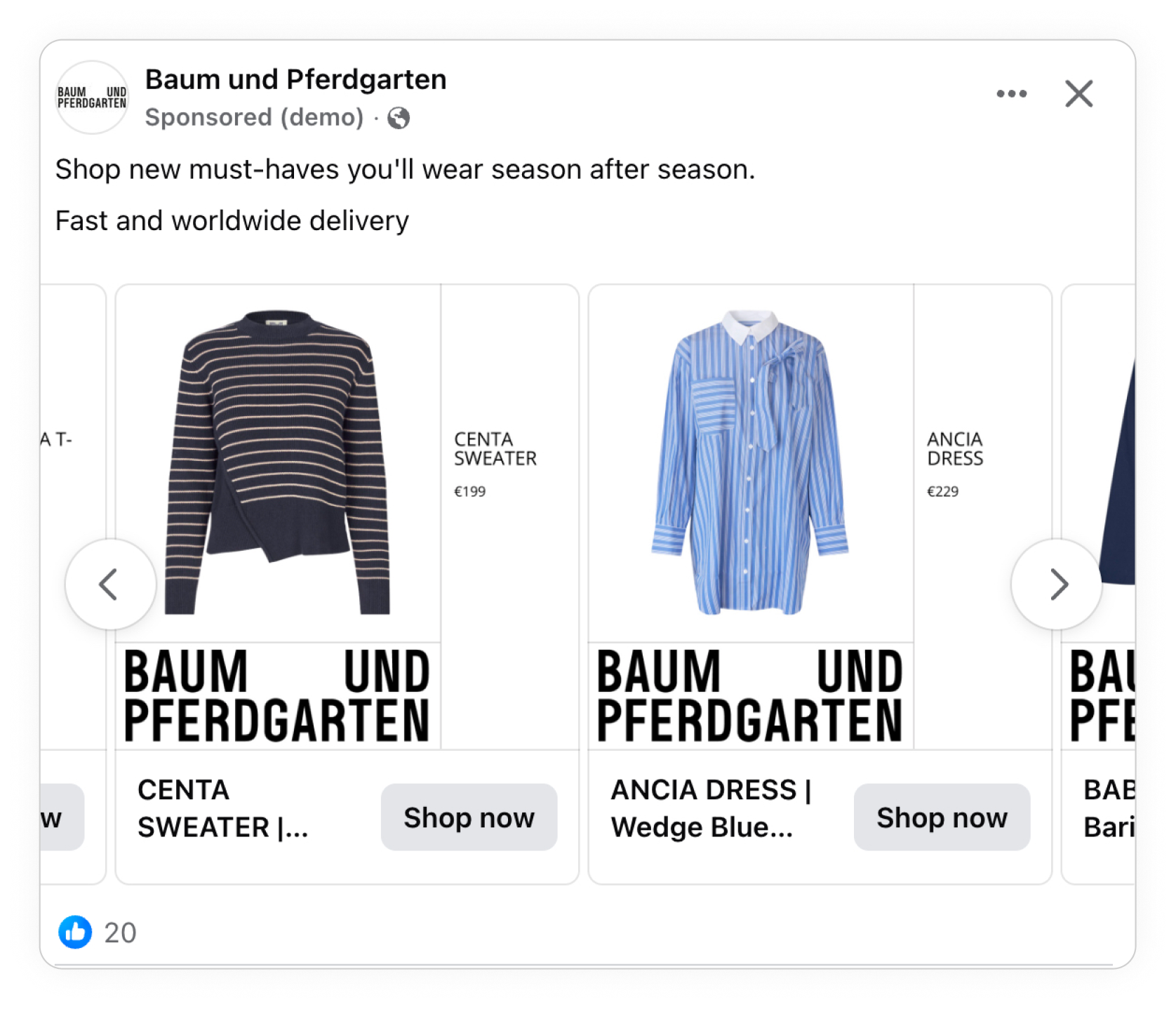
And that’s why BeSocial created bottom-funnel ads that used packshots. These were product-first designs, showing close-ups and details, geared directly at saying: “Hey! Here’s our product! Check it out and buy it if you like it!”
In this bottom funnel stage, keeping the focus only on the product and the price gives the shopper enough information to finally decide to buy.
After all that, the idea was to allow Meta’s algorithm to run the various ad formats and match each creatives to potential shoppers according to their position in the sales funnel.
By optimizing ad formats according to buyer intent, Baum und Pferdgarten immediately saw an increase in click-through rates for the top-level lifestyle ads, and a surge in conversion rates on the bottom-level ads, which led to overall higher ROAS.
This just goes to show you that when you personalize ad designs for user intent, you really can achieve better results.
Mathias Jørgensen
Head of Clients & Partner @ BeSocial
Turn best-sellers into product videos automatically
Once you’ve got your on-brand designs and ads that match buyer intent, the only thing left to do is to automate your product feed and optimize delivery using Adapt to Placement.
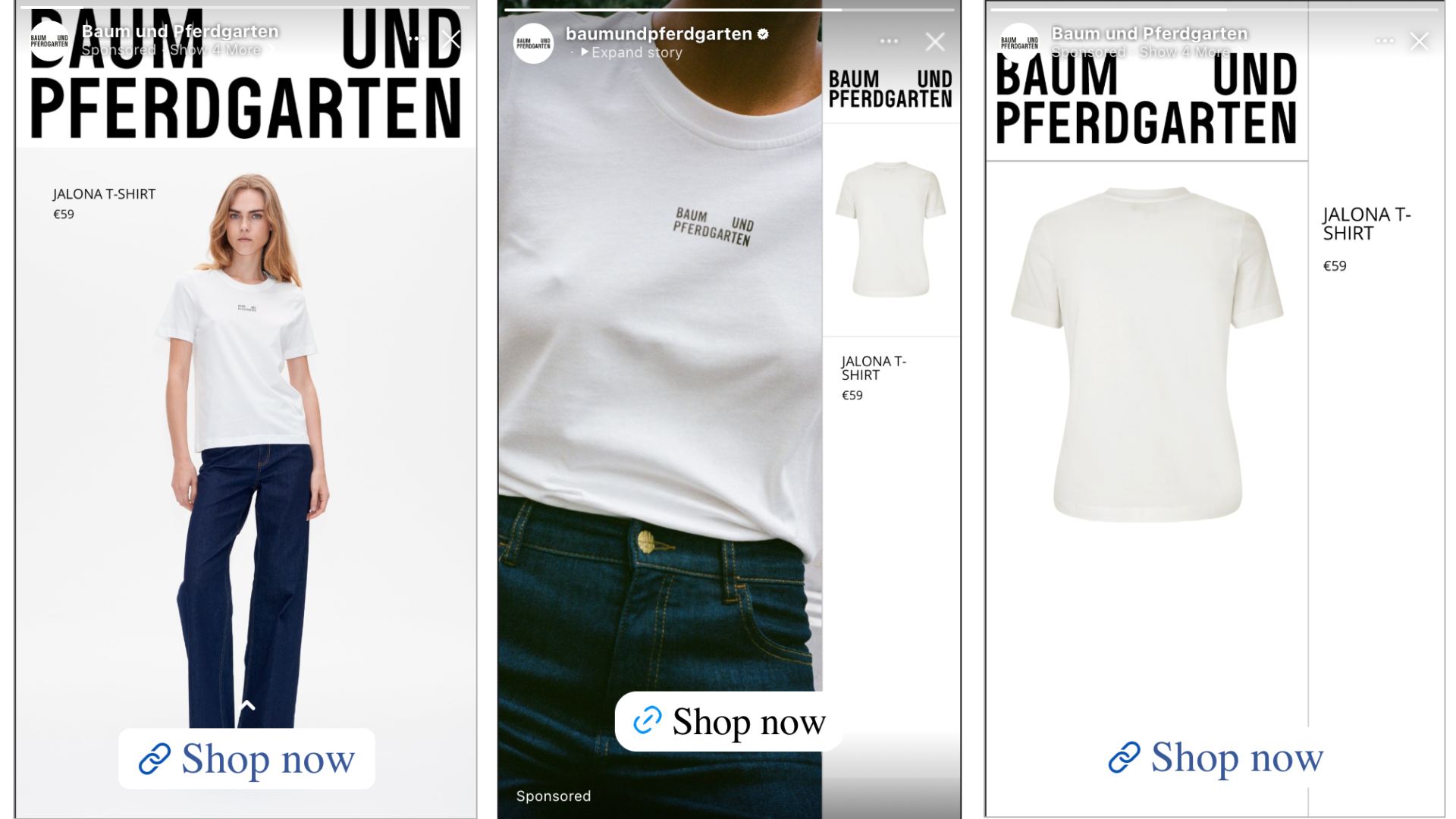
And that’s exactly what BeSocial did when they tagged all of Baum und Pferdgarten’s best-selling products, grouped them into relevant product sets, and turned them into high-converting Catalog Ad templates.
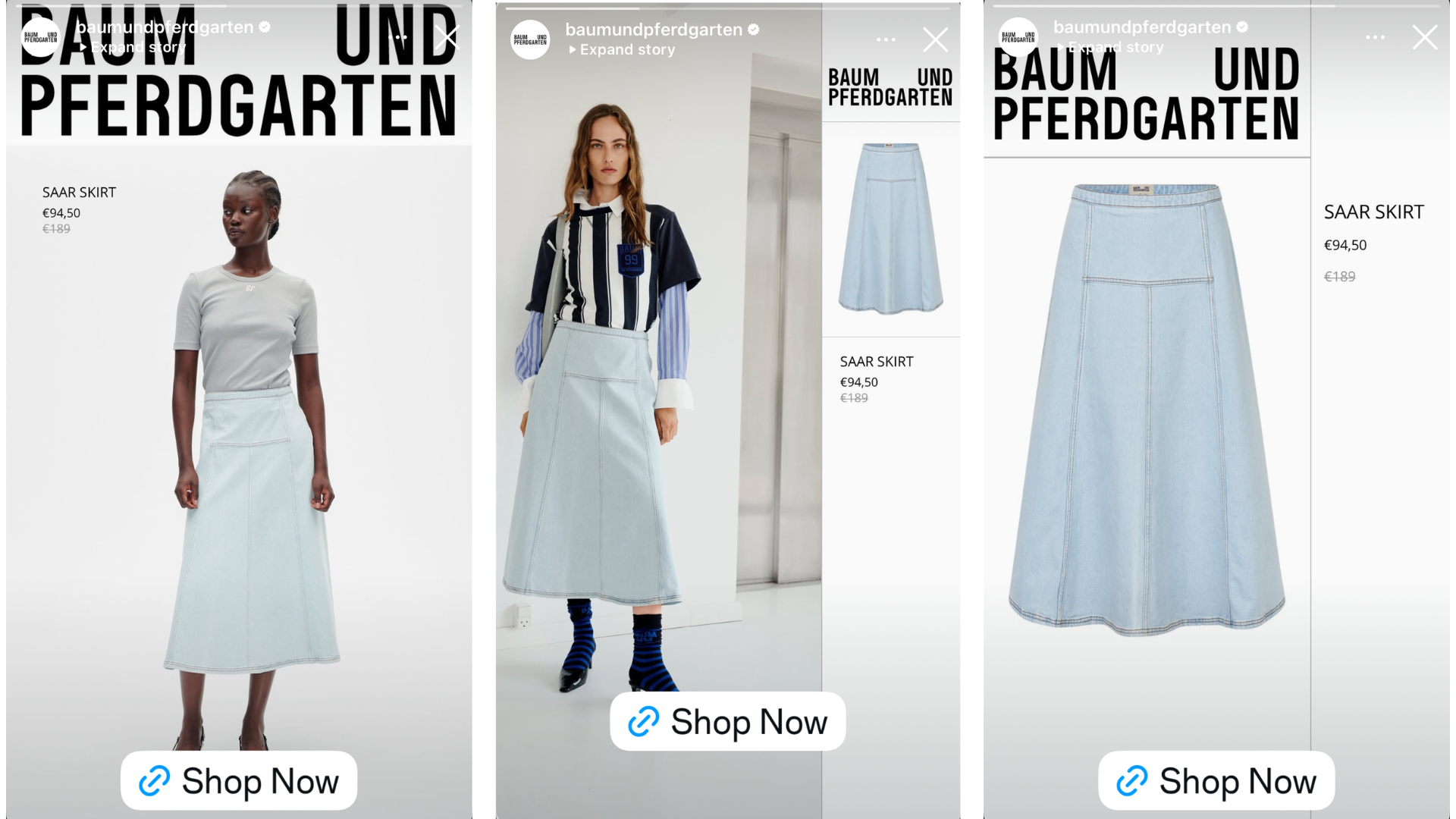
By tagging best-sellers and grouping them into product sets, BeSocial ensured that Baum und Pferdgarten’s top-performing products were continuously promoted. It also ensured their Catalog Ads would update themselves automatically as the list of best-selling products changes.
Yet another interesting strategy was the way BeSocial uploaded some of the brand’s product videos into the product feed to create even more immersive, eye-catching ads.
Social media users avoid ads like the plague. So when you catch them off-guard with a video, you’re already that much more likely to make them want to shop.
Finally, BeSocial also looked at using Adaptive Placement to show ads natively, in the proper format, even when shown in Stories or Reels.
As Mathias told us, most brands don’t even know they can optimize for these ad placements, which often results in poorly cropped or odd-looking ads. Ads that were designed for in-feed (1:1) use instead of the 9:16 fullscreen format.
BeSocial saw this as an opportunity. And thanks to Adaptive Placement, they made sure Baum und Pferdgarten’s ads not only looked better, but were shown natively everywhere they’re delivered.
Adaptive Placement makes sure all information is displayed within safe zones. So details like prices, branding, and product images are shown properly without being cropped out or covered up by buttons.
All this helped Baum und Pferdgarten expand their reach beyond basic in-feed ads.
It also helped drive stronger engagement, and all while pushing best-selling products, maintaining the brand’s visual identity, and ensuring scalability through high-converting Catalog Ads.
Mathias Jørgensen
Head of Clients & Partner @ BeSocial
Conclusion
BeSocial recognized that Baum und Pferdgarten had bold products and bold visual designs already present on their webshop. But they also knew their Catalog Ads were missing that strong visual identity that would get people interested in clicking.
They used Confect to inject branded visuals into Baum’s ads and optimize creatives for various levels of user intent.
Viewers were no longer shown ads randomly that may or not match their intent. They were now shown on-brand ads based on whether or not they’d heard of Baum und Pferdgarten before, and whether or not they’re at a point where they might make a purchase.
On top of that, BeSocial also leveraged Meta’s Product Feed Intelligence and Confect’s Adaptive Placement to ensure top-performing products are always being pushed, and that ads are always shown natively, no matter where they’re delivered.
All of this shows us that, when you create on-brand Catalog Ads tailored to audience intent, and when you use features like Product Feed Intelligence and Adaptive Placement, any brand can achieve more clicks, better conversation rates, and overall higher returns!