
How Inevo & Frederik and Louisa achieved a 102% increase in ROAS with catalog ads
March 24, 2026
.png)
Inevo is one of Scandinavia’s leading e-commerce marketing agencies. They help brands achieve sustainable growth by optimizing paid search, social media and email marketing campaigns.
They were recently approached by Frederik & Louisa, a premium Norwegian cosmetics brand, to improve campaign performance on Meta. The brand’s big problem was that they’d already built solid product lines. But they just hadn’t reached their full potential on Meta.
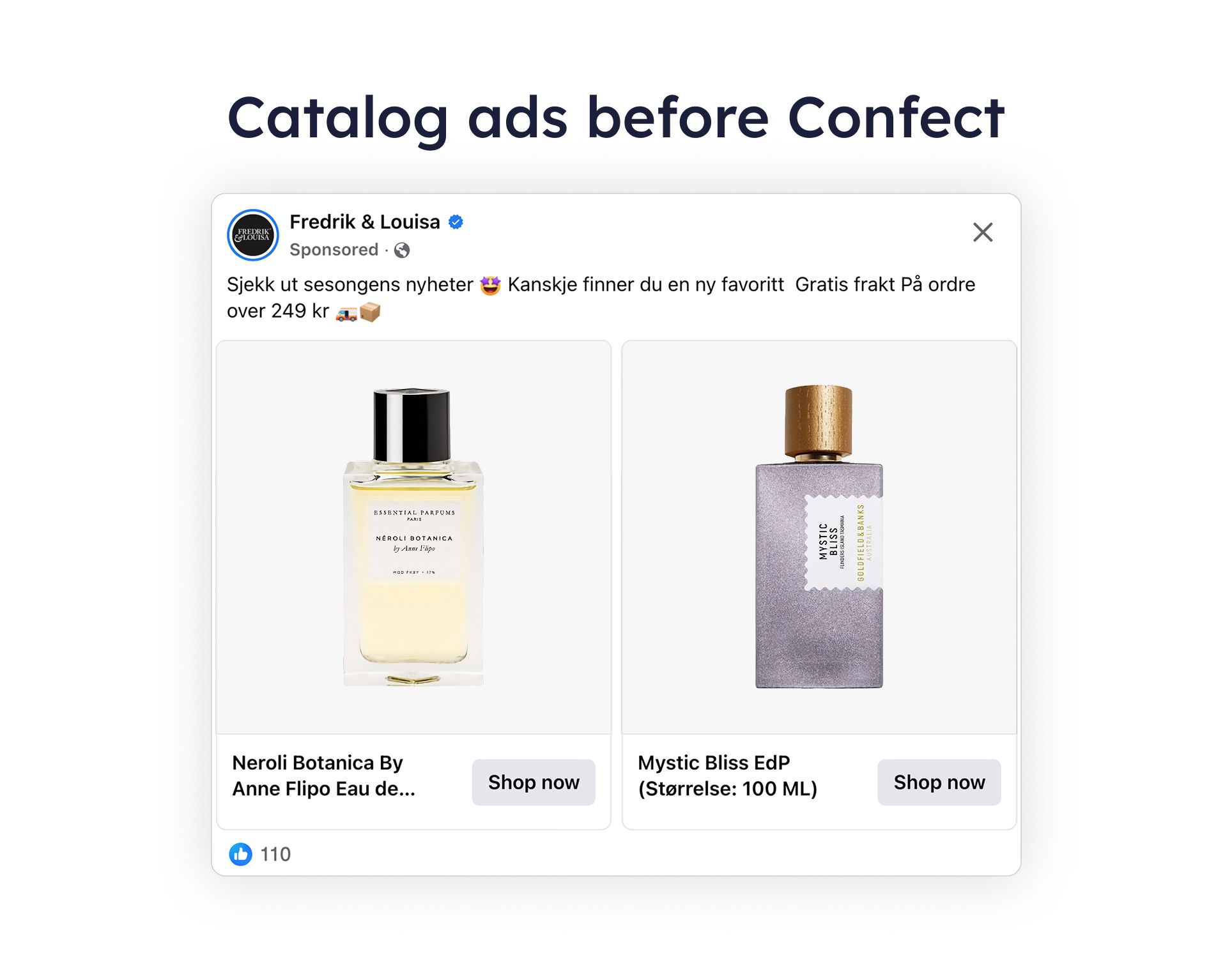
Before teaming up with Inevo, their ads consisted of standard packshots and default Meta frames that just didn’t match the high-end appeal of the brand’s products.
That’s why Inevo quickly moved to translate the brand’s existing campaign into catalog ads to better support new products, best-sellers, and ultimately, to build creatives that better-matched the brand and its campaign objectives.
Inevo & Frederik & Louisa’s results using Confect
By creating and segmenting on-brand catalog ads, the brand’s offer-based campaigns saw a +102% increase in ROAS and a 100% decrease in CPA. Meanwhile, new product campaigns saw a +15% ROAS and -10% reduction in CPA.
Beyond that, the brand also saw meaningful improvements in both scalability and algorithm training. New product launches generated more attention and purchase volume. But more importantly, that helped Meta’s algorithm learn faster and deliver better results across various product segments as time went on.
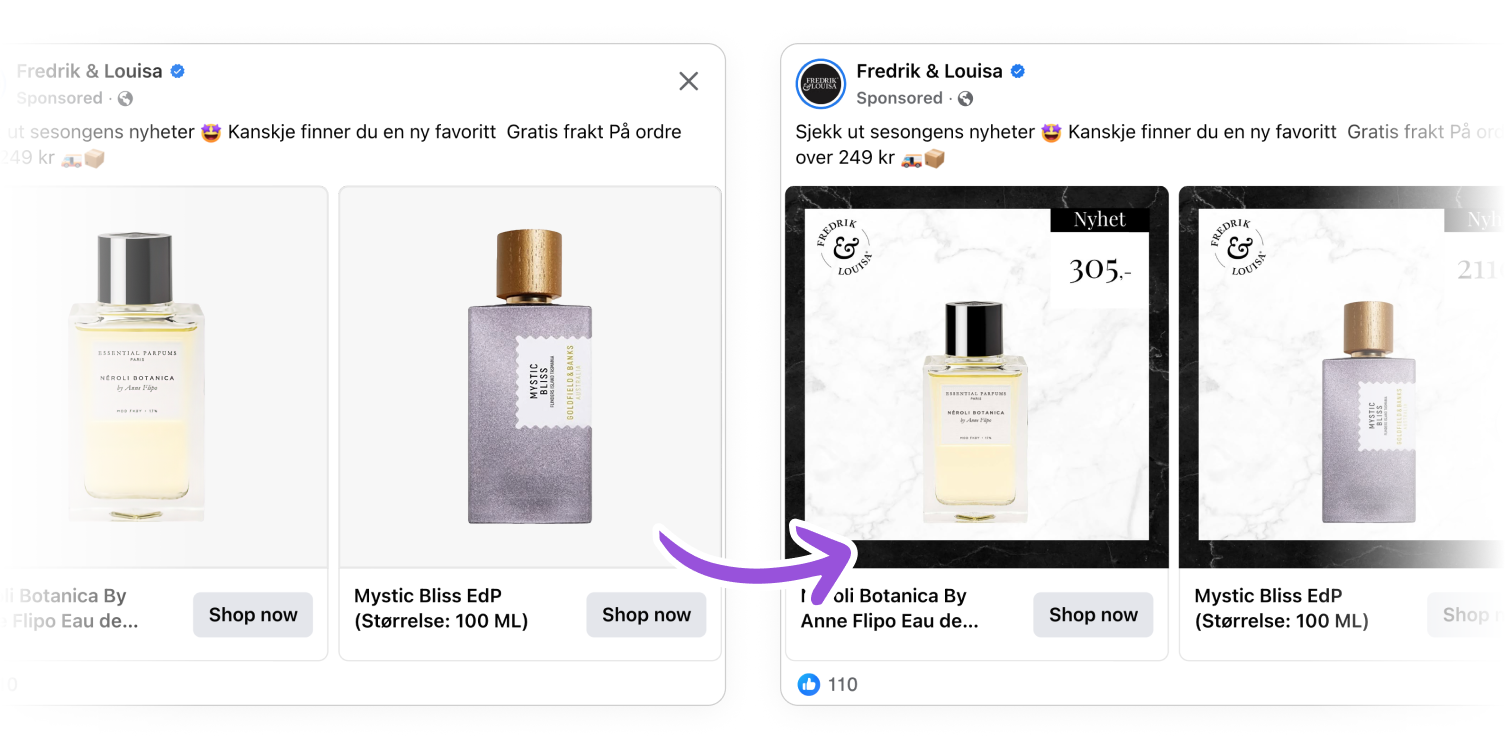
These were ultimately driven due to catalog ads offering algorithms more info to work with. They allow Meta to serve different ad variants to different people, and get a much better idea of who likes what products and why.
We recently caught up with the team at Inevo who walked us through how they help Frederik & Louisa achieve these impressive results.
Leveraging the brand's existing product lines to create always-on ads
Frederik & Louisa is not a new brand. They already had well-established product lines, sales, best-selling products, and new products hitting the market. The problem was that none of this was being optimized with their existing ad setup.
Inevo started by implementing an always-on campaign. First off, they created top-funnel always-on ad variants that were used specifically to promote individual products on sale.
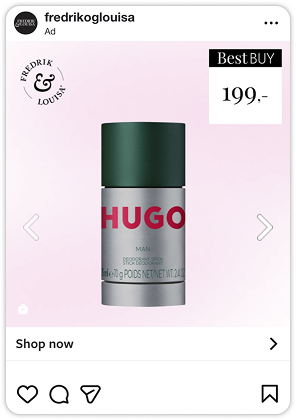
Ultimately, these were top-funnel prospecting ads which would be shown to a broad audience. This allowed Meta’s algorithm to show the variant to different people and gather information of who might be interested and why.
The results for the offer-based ads were a 100% uplift in ROAS and a 100% reduction in CPA. But then, as the algorithm learned more about the product and its intended audience, it would only get better at showing mid and bottom-funnel ads to the right people.
Doubling down on best-selling products as social proof
Another big issue was that, with their default designs, Frederik & Louisa just couldn’t focus on best-selling products. Essentially, this translated into a lot of missed revenue and no control of the campaign or ad spend.
By using custom labels, Inevo segmented their product catalog into different sets, such as best-sellers, new products, sales, etc. Then, they created designs that matched the category and intention of the ad.
Using design rules in this way allows brands to leverage their full product data and create designs that are much easier to target at the right people.
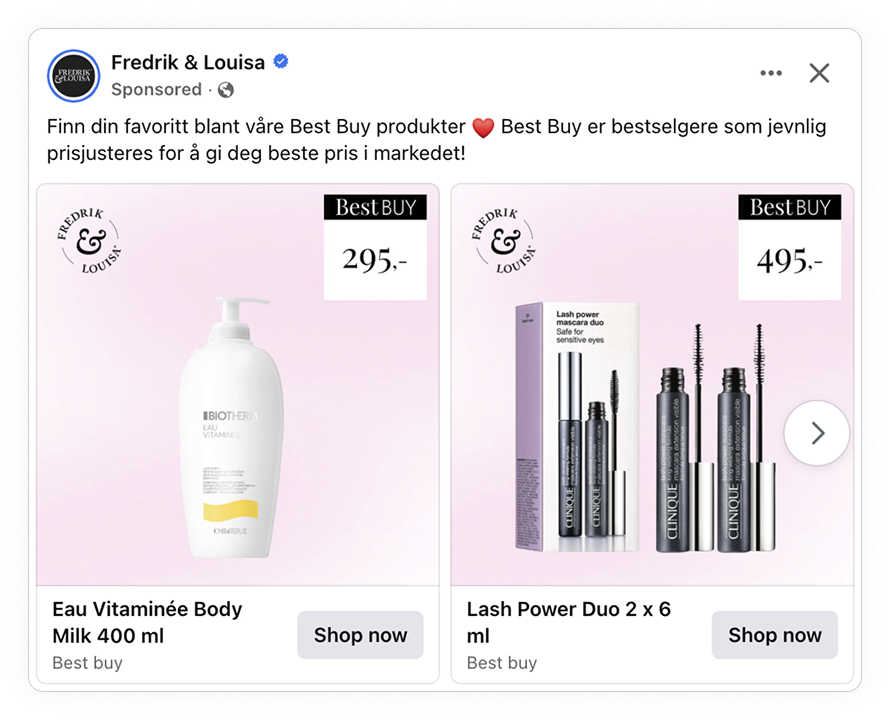
The beauty of this is that Meta takes care of everything automatically. So when new products are added, it’s automatically assigned into the corresponding category and the design rules are dynamically reflected into the creative.
For the new product and brand’s best-seller categories, the improved dynamic designs resulted in +15% ROAS and -10% CPA.
Exploiting Meta's algorithm towards maximizing ROAS
Another problem was that prior to teaming up with Inevo, all of the brand’s ads were thrown into the same pot.
The issue here is that algorithms always take the “safer” choice, which means they’re often biased towards products with previous sales. This results in slower algorithmic training and limited scalability when new products are added into the mix.
Inevo’s solution was to use custom labels and create product sets that isolated new or upcoming products with matching designs. They basically segmented the brand’s ads, allowing Meta’s algorithm to broaden its search for potential customers.
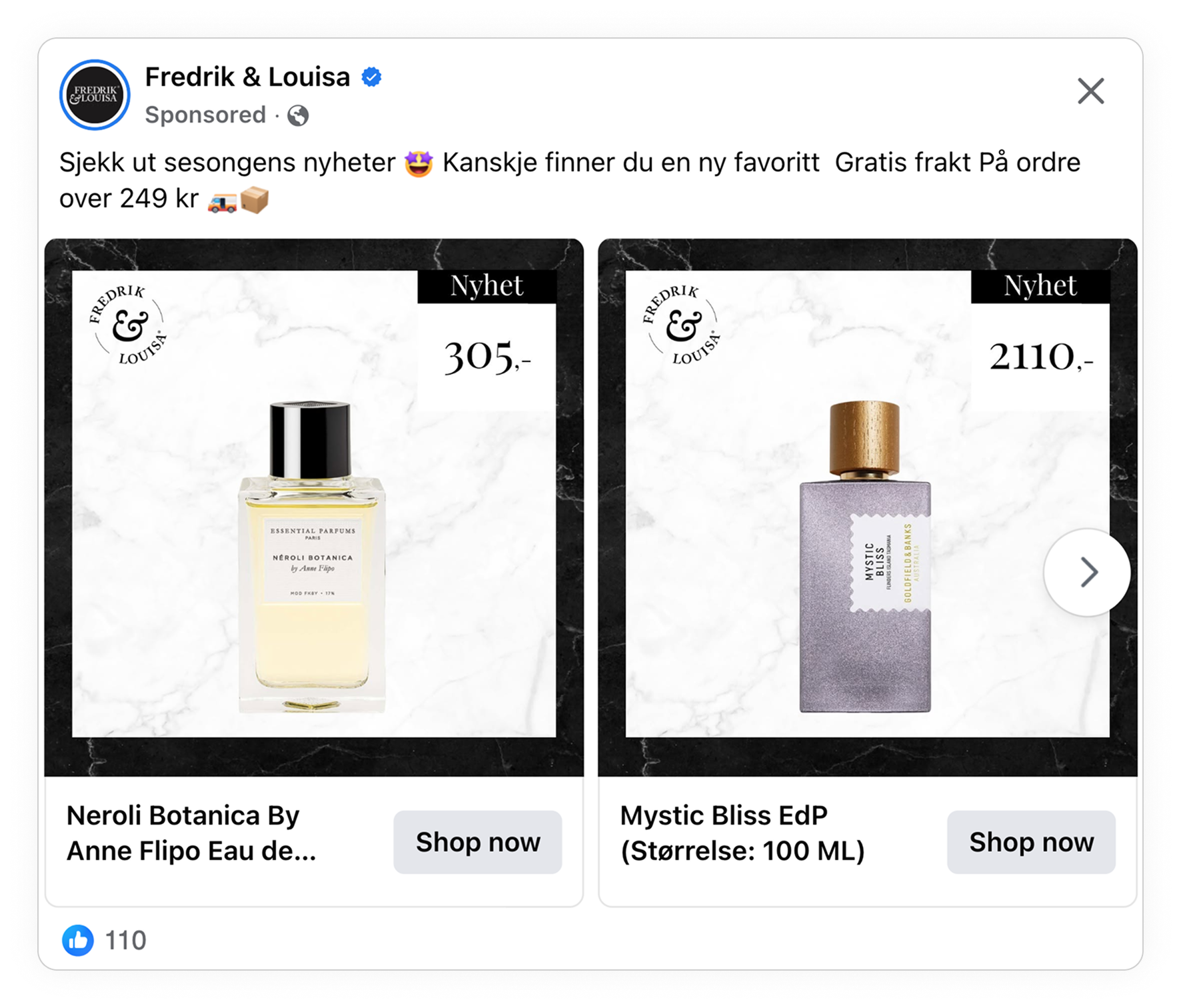
Instead of focusing mostly just on products with proven sales and a proven audience, the algorithm now had more ad variants to play with and try out on new potential shoppers.
Essentially, they “fed” more variants to the algorithm, which allowed it to speed up the learning phase, optimize its ability to serve the right ads to the right people, and maximize ROAS for any given campaign objective.
Adapting design for multiple formats and scaling campaigns
Now, the brand had a full funnel of ads, with high-level prospective designs and more product-focused creatives for lower-level, buy-ready audiences. But Frederik & Louisa were still not using Story ads placement to its full potential
So, the next step was to go even further and enable adaptive designs, which dynamically optimized the brand’s existing 1:1 ads for vertical 9:16 placements like Stories and Reels.
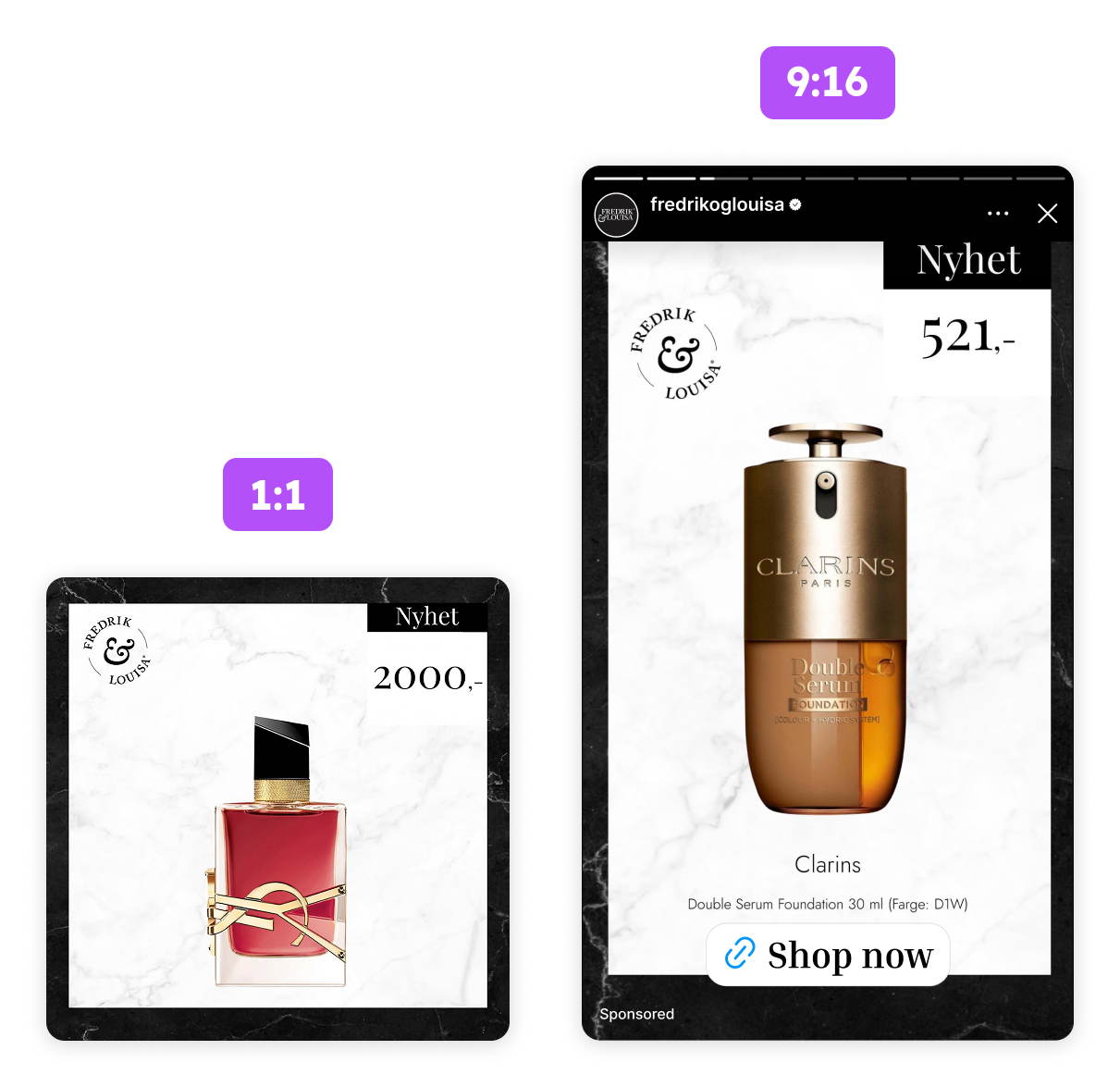
Prior to this, when the brand’s 1:1 ads were shown in these placements, they were often cropped awkwardly or shown with missing details. Not only did this make the ads look bad, but it also turns potential shoppers away.
By enabling adaptive designs and 9:16 formats, creatives were now sure to look good in all placements, whether in-feed, in Stories or Reels. The designs were optimized to respect safe zones and show off the brand’s premium aesthetics no matter what.
Conclusion
In the end, it was by creating always-on ads, and by segmenting products with matching designs and campaign objectives, that Inevo helped Frederik & Louisa achieve more sales across multiple product categories.
They also achieved better scalability, resulting in better brand, audience exposure, and an overall higher-end perception.
And all this was done by leveraging existing product data, and then simply allowing Meta’s algorithm to do what it does best, which is showing the most relevant products to the most likely customer.